
What are responsive search ads?
Responsive Search Ads (RSA) is an advanced advertising feature in Google Ads that allows advertisers to create more flexible and effective advertising campaigns. RSA is designed to automatically test different headline and description combinations to determine which combinations perform best, optimizing advertising content for different search queries and user preferences.
How does Google Ads create responsive search ads?
Google Ads creates Responsive Search Ads (RSA) by automatically combining various headlines and descriptions you provide. This process can be broken down into several steps:
1. Data entry
You enter multiple headlines and descriptions. Google Ads allows you to add up to 15 headlines and 4 descriptions.
2. Automated testing
The platform automatically tests different combinations of these headlines and descriptions to determine which ones best match search criteria and campaign goals.
3. Optimization
The system determines the most effective combinations based on ad performance, including click-through rate (CTR) and conversion rate. This means ads are automatically tailored to display the most relevant content to your target audience.
4. Contextual adaptation
Responsive search ads also adapt to the context of a user’s search query. This means Google Ads selects the most relevant headlines and descriptions that match a specific search query or user interests, thereby improving ad personalization.
5. Machine learning
All this is possible thanks to machine learning algorithms that analyze large volumes of data on user behavior and ad performance to maximize the results of advertising campaigns.
Using responsive search ads allows advertisers to increase the reach and effectiveness of their campaigns by optimizing ads for each specific search query, without having to manually test every combination of headlines and descriptions.
Examples of responsive search ads
Let’s imagine you’re running an advertising campaign for an online store selling sporting goods. Here are some example headlines you could use to create responsive search ads in Google Ads:
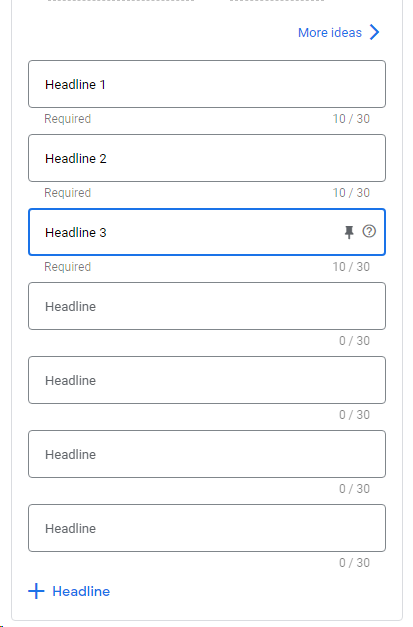
Headlines:
- Buy sports equipment online
- Your sporting goods store
- A wide selection of sporting goods
- Discounts on sports equipment
- Everything for fitness and sports
- Free delivery of sporting goods
- Find the perfect sports gear
- Special offers on sports equipment
- High-quality sports equipment
- Order sporting goods now
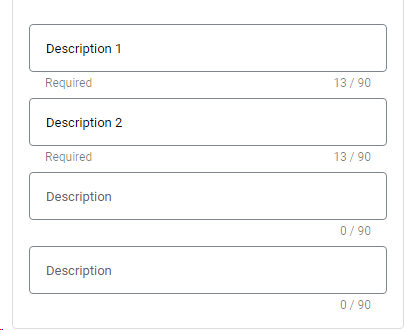
Descriptions:
- A wide range of high-quality sports equipment at affordable prices.
- Free delivery nationwide – fast and convenient.
- Exclusive discounts and promotions for our customers.
- Everything you need for sports and active recreation.
Examples of combining titles and descriptions:
- Buy sports equipment online + Wide selection of high-quality sports equipment at affordable prices.
- Large selection of sporting goods + Free delivery nationwide – fast and convenient.
- Discounts on sports equipment + Exclusive discounts and promotions for our customers.
- Everything for fitness and sports + Everything you need for sports and active recreation.
- Find the perfect sports gear + Quality sports equipment at affordable prices.
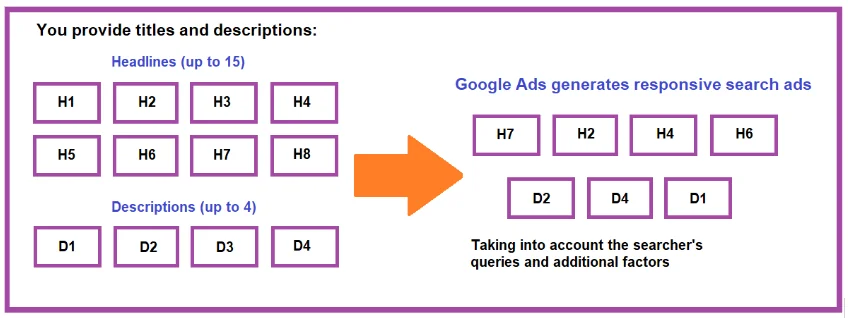
Google Ads will automatically test these and other headline and description combinations you provide to determine which ones perform best for different search queries and users. This allows you to maximize the effectiveness of your advertising campaigns, increasing the likelihood of clicks and conversions.
Using AI to Create and Optimize Responsive Search Ads on Google
Using AI to create and optimize responsive search ads in Google Ads allows advertisers to significantly improve the effectiveness of their campaigns, reduce the time and effort spent on manual setup and analysis, and offer more personalized and engaging content to potential customers.
Let’s look at a specific example to illustrate how artificial intelligence (AI) can improve the process of creating responsive search ads in Google Ads, increasing their effectiveness and relevance.
Initial situation:
You run an online store that sells specialized sports nutrition. The goal of your campaign is to increase sales of protein bars.
Without using AI:
You create several headline and description variations based on assumptions about what your target audience might be interested in. You test these variations over several weeks, analyze the results, and make manual adjustments. This process is time-consuming and requires constant attention.
Using AI:
Step 1: Automated generation and testing
- AI analyzes historical data: user behavior, popular search queries, and the previous performance of ads for similar products.
- Variation generation: Based on this analysis, the AI generates multiple variations of titles and descriptions, suggesting that some of them may best suit the interests of the target audience.
Step 2: Personalization and Real-Time Optimization
- Contextual personalization: AI determines which combinations of titles and descriptions are most relevant to specific users in real time, based on their search queries and interests.
- Dynamic optimization: The system continuously monitors ad performance and automatically adjusts impressions, favoring the most successful options.
Example of use :
- For users searching for information on post-workout recovery, AI selects ads that emphasize the benefits of protein bars for muscle recovery.
- People interested in weight loss are shown ads that emphasize the low sugar and high protein content of the bars.
- AI tracks seasonal trends—for example, the increased interest in fitness during the holiday season—and adapts advertising messages to motivate shoppers to start the new year with healthy food.
Thus, using AI not only automates the creation and testing of various ad variations but also significantly increases their relevance and effectiveness by adapting to the needs and interests of specific users in real time. This leads to increased click-through rates (CTR), higher conversion rates, and, consequently, increased sales with lower advertising costs.
You can also read the articles: